(RNS) — The temptation is to follow “The Star-Spangled Banner,” our national anthem, with an immediate declaration of “Play ball!” But in honor of the 250th birthday of the United States, let’s resist that temptation and listen.
Let’s start with the first stanza — the only one anyone knows.
O say can you see, by the dawn’s early light,
What so proudly we hailed at the twilight’s last gleaming,
Whose broad stripes and bright stars through the perilous fight,
O’er the ramparts we watched were so gallantly streaming?
And the rockets’ red glare, the bombs bursting in air,
Gave proof through the night that our flag was still there;
O say does that star-spangled banner yet wave
O’er the land of the free and the home of the brave?
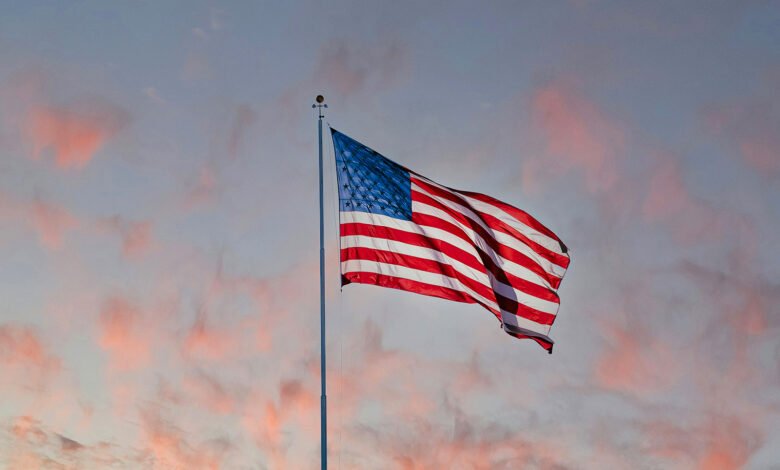
If you were not sleeping during class in fifth grade, you know the history of these lyrics. They were written by Francis Scott Key in 1814, originally as a poem: “Defence of Fort M’Henry.” He had witnessed the British bombardment of Fort McHenry in Baltimore during the War of 1812, and at dawn, he saw the American flag flying over the fort. That sight inspired him to write the poem.
But, if you listen again — and if necessary, sing it again — you may notice something else.
The first line is a direct question (“O say can you see … ?”), and the last line closes with a question mark (“home of the brave?”). The song is one long question, and those lines emerged out of war-induced anxiety and fear.
It is as if every singing of the song provokes that question: Does the flag still wave? (Yes, it does).

America itself is a series of questions that are far more enduring than whether that flag will still wave over a fort. Among them: Are we still “the land of the free and the home of the brave?”
Lyrically speaking, however, my favorite patriotic song is “America the Beautiful” — if only for the absolutely gorgeous, evocative words in the stanzas that people rarely sing. Each contains a sermon on America itself:
America! America!
God mend thine every flaw,
Confirm thy soul in self-control,
Thy liberty in law!
It tells us that we evaluate our individual and collective soul by how well we control our passions, and how we balance our freedom with responsibility.
And then:
America! America!
May God thy gold refine
Till all success be nobleness,
And every gain divine!
This is not about the refining process of a rare metal. It is about the spiritual refining process of what we seek to gain, and how we can lift our vision above the sordid to the sacred.
And then, these words will always bring a lump to my throat:
O beautiful for patriot dream
That sees beyond the years,
Thine alabaster cities gleam
Undimmed by human tears!
I remember singing them at a memorial service following 9/11. It reminded me that, yes, our city would gleam yet again, even in the blur of our tears.
What about the melody of “The Star-Spangled Banner?” It started as the tune of “To Anacreon in Heaven,” a popular English song written around 1775 by John Stafford Smith. It is very difficult to sing unless you possess the vocal range of, say, the late Freddie Mercury. What can we learn from this vocal challenge?
Just as America is a series of questions, it is also a series of aspirations — of constantly straining our voices and our vision to reach for something higher. Both the voice and the body must stretch to meet the ideals that the flag symbolizes.
Or, perhaps the vocal range symbolizes a kind of overreach, given how notoriously un-singable it is for many citizens. The anthem reaches melodically and the nation reaches imaginatively toward promises of liberty, equality, greatness, reform and transcendence. The melody is an auditory analogue to what the nation asks of its citizens — that they reach higher than themselves.
That might be why we listen to the way singers sing the song at public events, and we judge those efforts. At the 2011 Super Bowl, Christina Aguilera famously mangled the text, combining lines and skipping parts. And who can forget the 1990 San Diego Padres game when Roseanne Barr sang off‑key, shrieked and concluded with spitting and a crotch‑grab? Those are not only aesthetic failures; they become breaches of national etiquette.
America is a series of questions and a series of reaches. The anthem contains both in condensed form.
It is not only America that poses questions and reaches. I landed in Israel today, on the 50th anniversary of when I first came here — July 4, 1976. I departed from the U.S. during the celebration of our nation’s 200th birthday, and I arrived in Israel as that nation was celebrating the Entebbe rescue.
My friend, Yossi Klein Halevi, has often noted that American synagogues fly two flags — that of the United States of America, and that of Israel — and that those two identities are intertwined. That’s the way it is with our national anthems, as well. “The Star-Spangled Banner” contains questions. “Hatikvah” contains hopes.
“The Star-Spangled Banner” asks us to raise our eyes to the heavens to see the rockets. “Hatikvah” asks the Jew to look toward Zion, and see the future.
“The Star-Spangled Banner” invites the singer to climb an octave and a half. “Hatikvah” also requires a lift of an octave.
Both of the countries I love require reaches and climbs of moral vision, of responsibility and of civic courage. And yes, today, I ask that God will bless America.
Source link