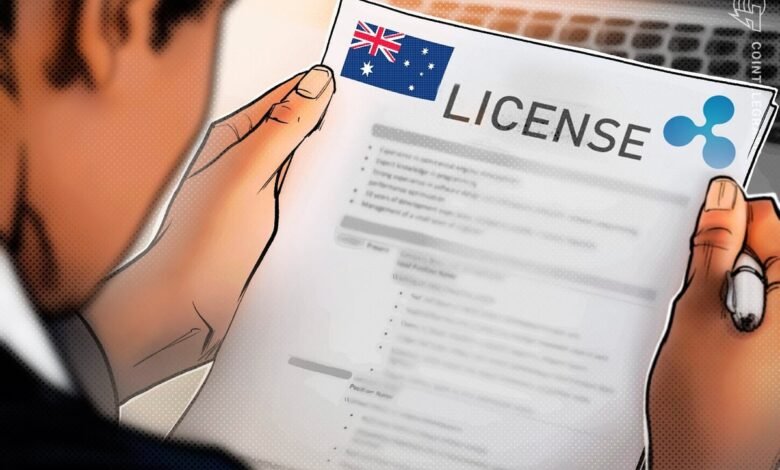

Crypto company Ripple said it is set to secure a key financial services license in Australia through the acquisition of an Australian payments firm, adding to an international license grab over the last year.
In a statement on Tuesday, Ripple said it will buy BC Payments Australia, a corporate entity tied to the European Banking Circle Group, allowing it access to the company’s Australian Financial Services License (AFSL), which is set to become a requirement for certain crypto companies to provide financial services in the country.
The acquisition of BC Payments Australia is set to close on April 1, according to a report from The Australian, citing comments from Ripple APAC managing director Fiona Murray.
Murray said there was “enough institutional interest in digital assets to warrant the investment for us.”
“Getting licensed was always part of our plan.”
Exciting milestone for @Ripple in Australia! 🇦🇺
Ripple is obtaining an Australian Financial Services License (AFSL). As we continue to bridge TradFi with the next gen of digital infrastructure, regulatory compliance remains the foundation of everything we build:… pic.twitter.com/JNF1iQSyG7
— Ripple (@Ripple) March 10, 2026
In Ripple’s statement, Murray said “Australia is a key market for Ripple” and that an AFSL would strengthen the company’s ability to scale its payments business throughout the country.
“With the AFSL in place, Ripple Payments can manage the full lifecycle of a transaction, from onboarding and compliance through funding, FX, liquidity management, and final payout, while integrating both traditional banking rails and digital assets.”
Ripple has been working to expand its collection of international licenses over the last year.
In addition to recently securing conditional approval for a national trust banking charter in the US, Ripple has also won payment licenses in Singapore, the UAE and the UK over the last 12 months.
The firm has also been working to expand use cases for XRP (XRP) and its Ripple USD (RLUSD) stablecoin through key acquisitions in recent months, most notably non-bank prime broker Hidden Road and corporate treasury platform GTreasury.
The acquisition of Hidden Road — now Ripple Prime — made Ripple the first crypto-native company to own and run a multi-asset prime broker, covering everything from clearing, financing and brokerage across digital assets, derivatives, swaps, foreign exchange, and fixed-income products for institutional clients.
Ripple’s plans for Australia come as lawmakers introduced the Digital Asset Framework bill last year, which passed through the lower house in February and is now before the Senate.
The Australian Securities & Investments Commission (ASIC), the country’s top markets regulator, has also proposed rules for the crypto sector.
ASIC has also been pushing for crypto trading platforms to secure AFSLs, stating in October that it wouldn’t take any action over licensing matters until at least June 30, 2026.
Crypto exchange Coinbase is also looking to secure an AFSL in the coming months.
Murray hopeful Australia will end crypto debanking
Murray told The Australian that she hopes the move to AFSLs will end the widespread crypto debanking issue in Australia, which has seen many banks impose blocks or restrictions on customers attempting to deposit funds to crypto exchanges.
Related: Gemini announces exit from UK, EU, Australia, slashes workforce
Australia’s “Big Four” banks — Commonwealth Bank, Australia and New Zealand Banking, National Australia Bank and Westpac — have all applied varying forms of crypto exchange restrictions.
In an interview with Cointelegraph at the XRP Australia conference on Feb. 27, OKX Australia CEO Kate Cooper said the banking barriers continue to affect adoption in the country.
“It’s absolutely still a challenge in the industry,” Cooper said. “I don’t think there’s been any improvements. And we’re working hard with governments to encourage them to set some standards around it.”
Magazine: Clarity Act risks repeat of Europe’s mistakes, crypto lawyer warns