
Every year at the Tokyo International Film Festival, the programming team makes an effort to champion emerging talent that challenges preconceived notions of what Japanese cinema is or can be. Through their Women’s Empowerment and Nippon Cinema Now strands, the festival often showcases new work from female and non-binary filmmakers who bring their unique worldview to the big screen. At the 2025 edition of the festival, three of the most exciting filmmakers showing their work were Mika Imai (Kiiroiko), Chihiro Amano (Sato and Sato) and Keiko Tsuruoka (Saikai Paradise) whose films confront notions of love, family, belonging and home. Amid the rush of the festival, we caught up with these three trailblazing filmmakers to find out what informs their creative practice.
Mika Imai
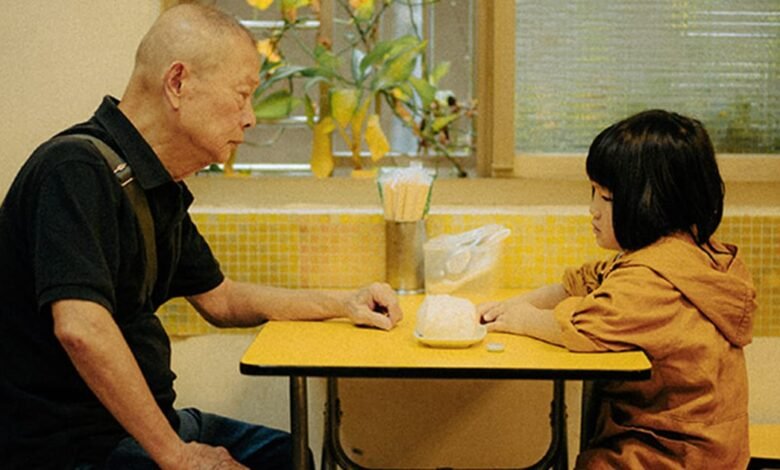
Kiiroiko (the Japanese word for ‘yellow’) tells the story of a deaf father and son who become separated during a holiday to Taipei. Unable to communicate with locals due to the language and hearing barrier, they frantically try to find their way back to one another, and in the process discover what they might have in common with the Taiwanese deaf community. Kiiroiko is Imai’s third feature film.
Get more Little White Lies
LWLies: How did you first develop an interest in filmmaking as a deaf person?
Imai: I grew up in a family of all Deaf people. My parents are Deaf, and my younger brother is also Deaf — a family of four Deaf people. Obviously, our tool for communication was Japanese Sign Language. At the school for the deaf back then, sign language was prohibited, and we were forced to train how to pronounce words instead. However, at home, we got to use sign language, which was very comfortable. I grew up not knowing why it was like this.
When I was in the 6th grade, my father bought a home video camera. I was very close with my younger brother because I couldn’t communicate well with the people in the neighborhood, so we would always play together, and we started to shoot [with the video camera]. It was so interesting to watch myself signing on film, and I was so impressed watching it because in deaf culture there are no letters, so if you want to record anything, visual has to be the tool. There is such an affinity between deaf culture and visual images. I kept playing, using the video camera, and eventually through the fun I had, I started to make films. The guy who plays the father of the missing child in the film is my younger brother, Akito.
No way! He’s a great actor.
I’m so thankful for his presence. Without him I wouldn’t be making films. We’ve been developing our careers together.
That’s beautiful that you have each other for support. I actually wanted to ask about casting the film, because it’s really lovely to see so many deaf actors on screen. It doesn’t happen very often in any language. I wondered how you went about casting – obviously, with your brother, you didn’t have to look very hard. But especially because you’re working with Taiwanese actors as well, what approach did you have?
Well for 10 years I have been associated all the time with the Taiwan International Deaf Film Festival, which unfortunately no longer exists since the pandemic. But I have been in touch with people I have met through that film festival. Also, because the film includes the Association for the Deaf in Taiwan, I wondered how to go about casting people, because there are hardly any professional deaf actors in Taiwan. So, I thought to make it look real, why don’t I ask the actual people who work at this association to appear in the film? And that’s exactly what happened. And as for CODA (Children of Deaf Adults), hearing people with deaf parents, they are actual CODA people who act in it. Tom, the boy wearing yellow, is the son of my younger brother. Keeping it in the family! Tom is very interested in acting, and actually taking acting lessons, so I thought this would be perfect.