
“Now that sex is available to us in hardcore porno films, death remains the one last taboo in cinema,” wrote the film critic Amos Vogel in 1980. Sex and death, Vogel believed, were the two facets of life hidden behind closed doors – with cinema one of the few artistic mediums with the ability to bring those private human rites out into the open.
More than 40 years after Vogel’s assertion, death is still stigmatised onscreen. Illness more generally is often treated with squeamishness; the genre of films and documentaries dedicated to death, from cloying romantic tragedies such as The Fault in Our Stars to tense, harrowing end-of-life docs like Extremis, are understandably imbued with gravity – but are also guilty of fuelling a sense of fear. Conversely, the high body counts in action movies, thrillers, horrors and noirs usually put minimal emphasis on minor characters’ deaths in favour of driving the plot forward. Death in film is often either over-sentimentalised or downplayed, the sober reality conveniently kept at arm’s length.
Get more Little White Lies
However, a string of recent documentaries are tentatively trying to break down the barriers around this once unbroachable subject. Through Kirsten Johnson’s docu-fantasy film about her father, Dick Johnson is Dead, the documentarian grapples with mortality in a truly unconventional way, creating different scenarios for how her father could pass, ranging from the probable to the absurd. These are enacted to help prepare the father and daughter for his actual death (with the help of fake blood and a few stunt doubles). In Steven Eastwood’s Island, the terror and repulsion typically surrounding cinematic death is stripped away as the final moments of four people with terminal illness are tenderly recorded. Then there’s The Endfluencers, which charts the growing phenomenon of people sharing their experiences with terminal illness on social media.
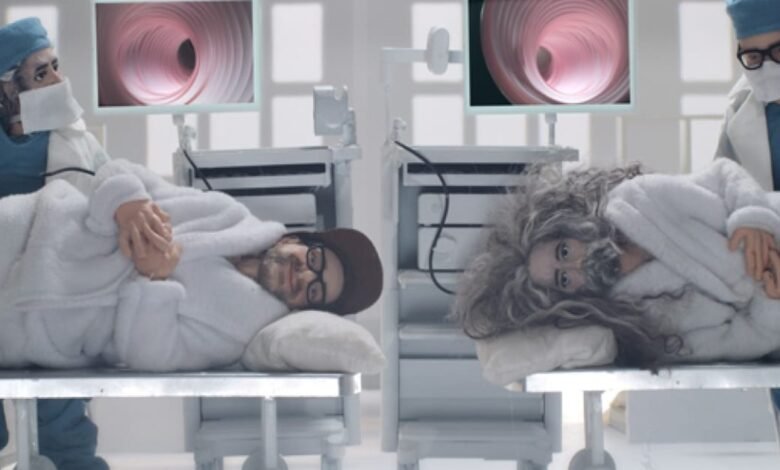
André is an Idiot is the latest addition to this burgeoning new category of films. Like Dick Johnson is Dead, it takes a light-hearted approach to our demise. “I hadn’t heard from André in probably five years,” says the documentary’s director Tony Benna, recalling how his old advertising colleague and friend suddenly invited him to a Zoom call. “He said, ‘I’ve got a really fun project. […] Okay, guess what? I’ve got a stage four cancer, and I want to make a comedy documentary about it.’”
Partly an ode to André’s eccentric personality, partly an unorthodox look at the realities of dying, Benna’s documentary starts off with an unusual premise: its subject neglected to get his colonoscopy when he should have, hence the reason why he is an “idiot”. The documentary locates the humour in the situation, but is also stippled with poignant revelations, from the realisation that for other people life goes on after death, to the strangeness that it is possible for André and his friends and family to have fun with his diagnosis. There are also grounding truths, such as the observation that “dying is surprisingly boring”.
Making Benna’s offbeat documentary was a means for one person to reclaim the narrative around their own death. Rather than being steeped in melancholy as traditional films about death and dying often are, it resists the same gloomy trajectory. André wisecracks not only about the nitty gritty of colon cancer, but about how he wants to die, from “death yells” and head transplants, to cloning and Russian roulette with Californian death pills. “It’s okay to buck convention,” says Benna. “It’s okay to die how you want to die. André really allows us to look at our lives and our deaths in a way where we don’t have to follow convention or rules.”